

Reading Bat Trang pottery village through clay, fire and glaze
Bat Trang is more than a place to buy ceramics. Walk its lanes slowly and you can read a whole body of knowledge about clay, fire and glaze, passed down by hand over generations.
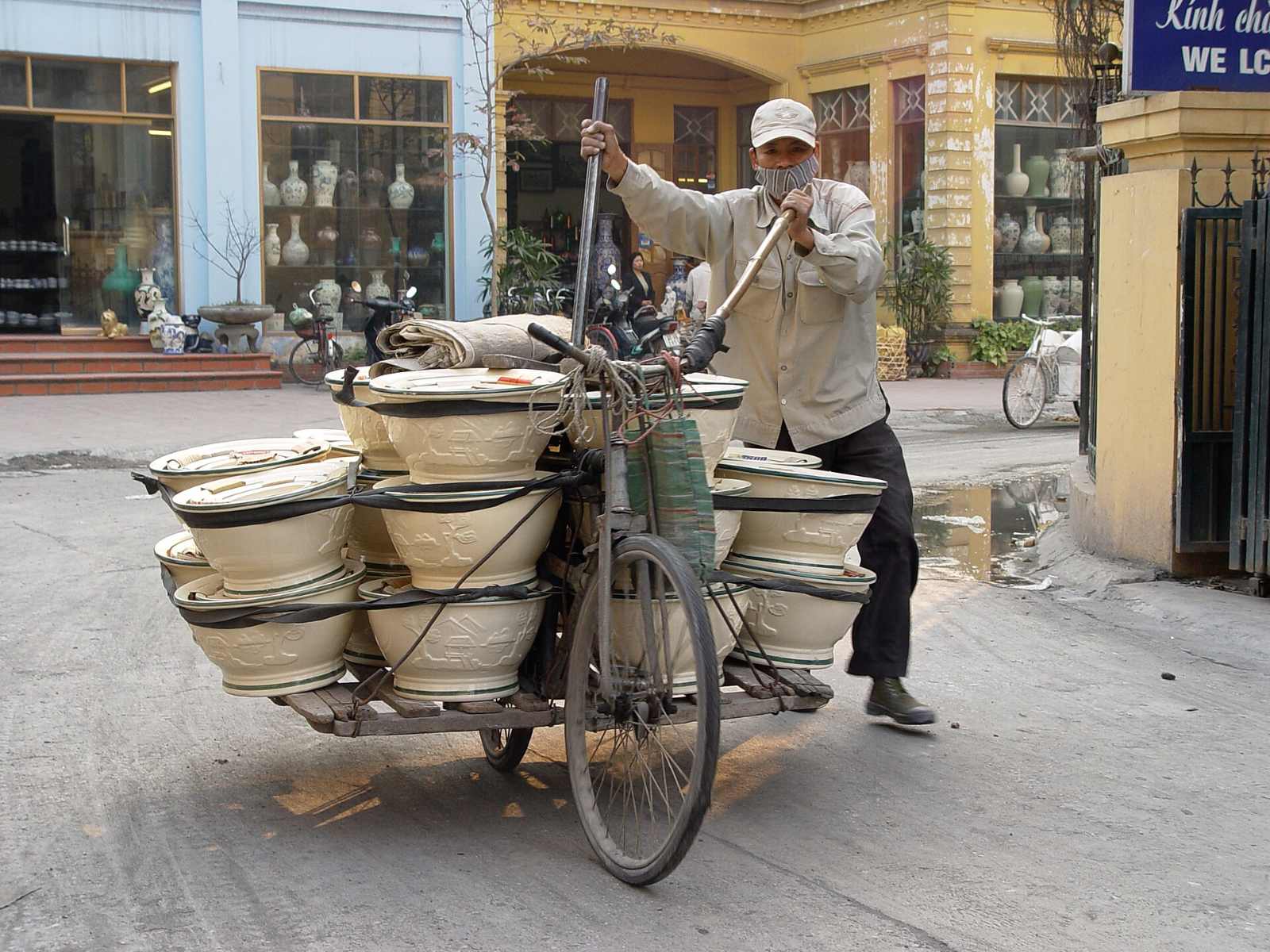
Table of contents
Mornings in Bat Trang begin with the smell of wet clay. Long before the roadside shops open, potters in the lanes behind them are already at their wheels. They are not making pottery for display. They make it because it is the work of the whole village, of their parents, and probably of their children.
Many people come to Bat Trang to buy a tea set or to try the wheel. There is nothing wrong with that. But if you slow down, you can read a whole system of knowledge here: how clay is chosen, how long it is kneaded, which glaze suits which fire, and why a bowl has the shape it has.
A village that lives on clay
Villagers often say pottery has been made in Bat Trang for hundreds of years. Studies give different dates, but agree on one point: its place on the Red River gave the village both clay and a waterway to send goods far and wide.
What sets Bat Trang apart from a craft market is how home and workshop flow into each other. The yard is where pieces dry. The ground floor is the workshop. Lunch is eaten between shelves of pieces waiting to be fired. Craft is not separate from daily life, and so craft knowledge is passed on naturally: children grow up beside the wheel, watching and copying before they are ever taught.
From a lump of clay to a bowl
Traditional pottery making can be divided into a few main stages. Details vary between workshops, but the order is broadly the same.
Preparing the clay
Clay is soaked, cleaned of impurities and left to rest before kneading. Many older potters say they can tell whether clay is ready just by squeezing a handful.
Shaping
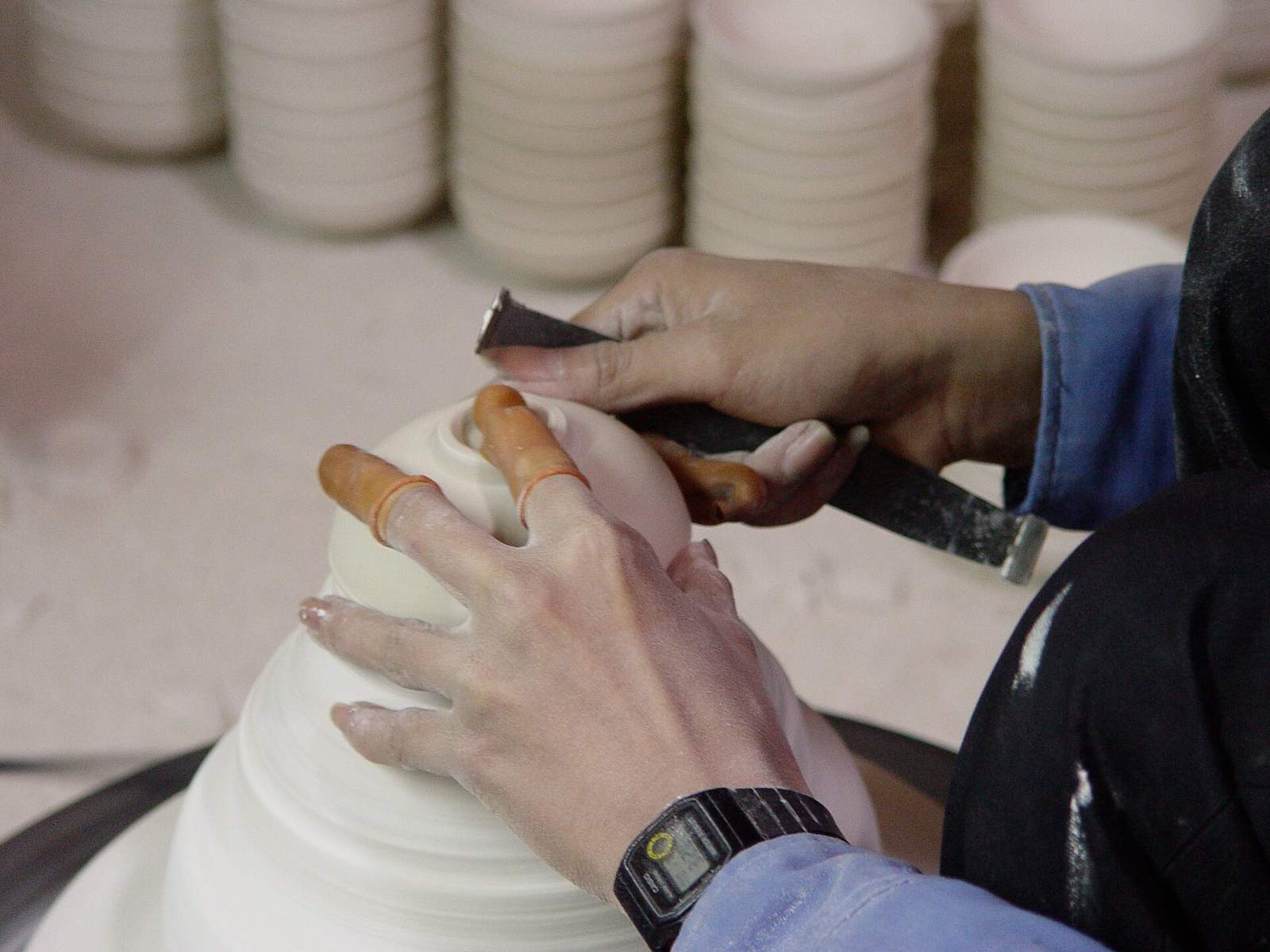
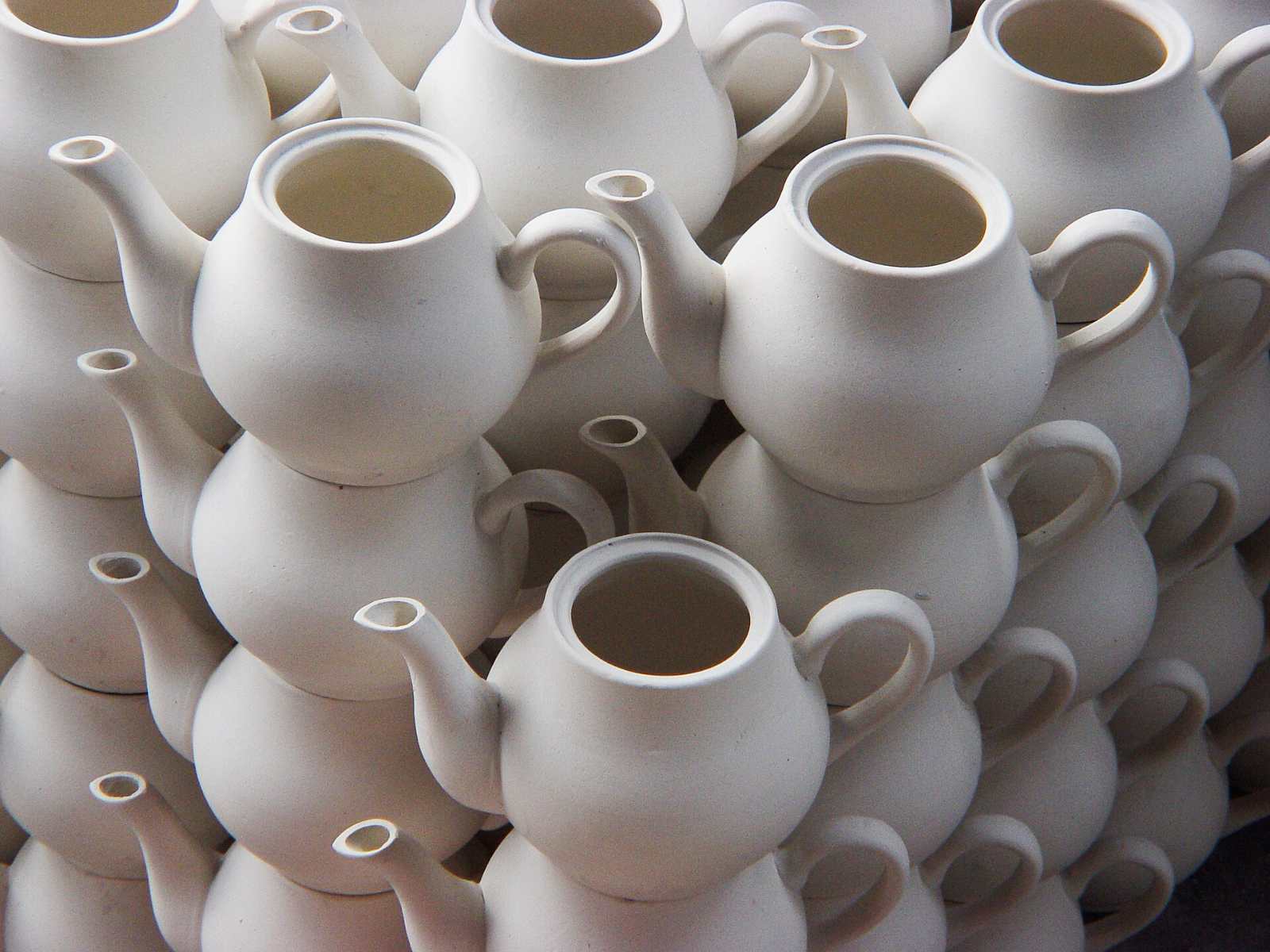
There are two common methods: throwing by hand on the wheel, and slip casting in moulds. Hand throwing leaves each piece slightly different. Casting allows larger batches with identical shapes. Most workshops today use both, depending on the product.
The clay knows when you are in a hurry. Rush your hands and the vase goes crooked.
Drying, trimming and decorating
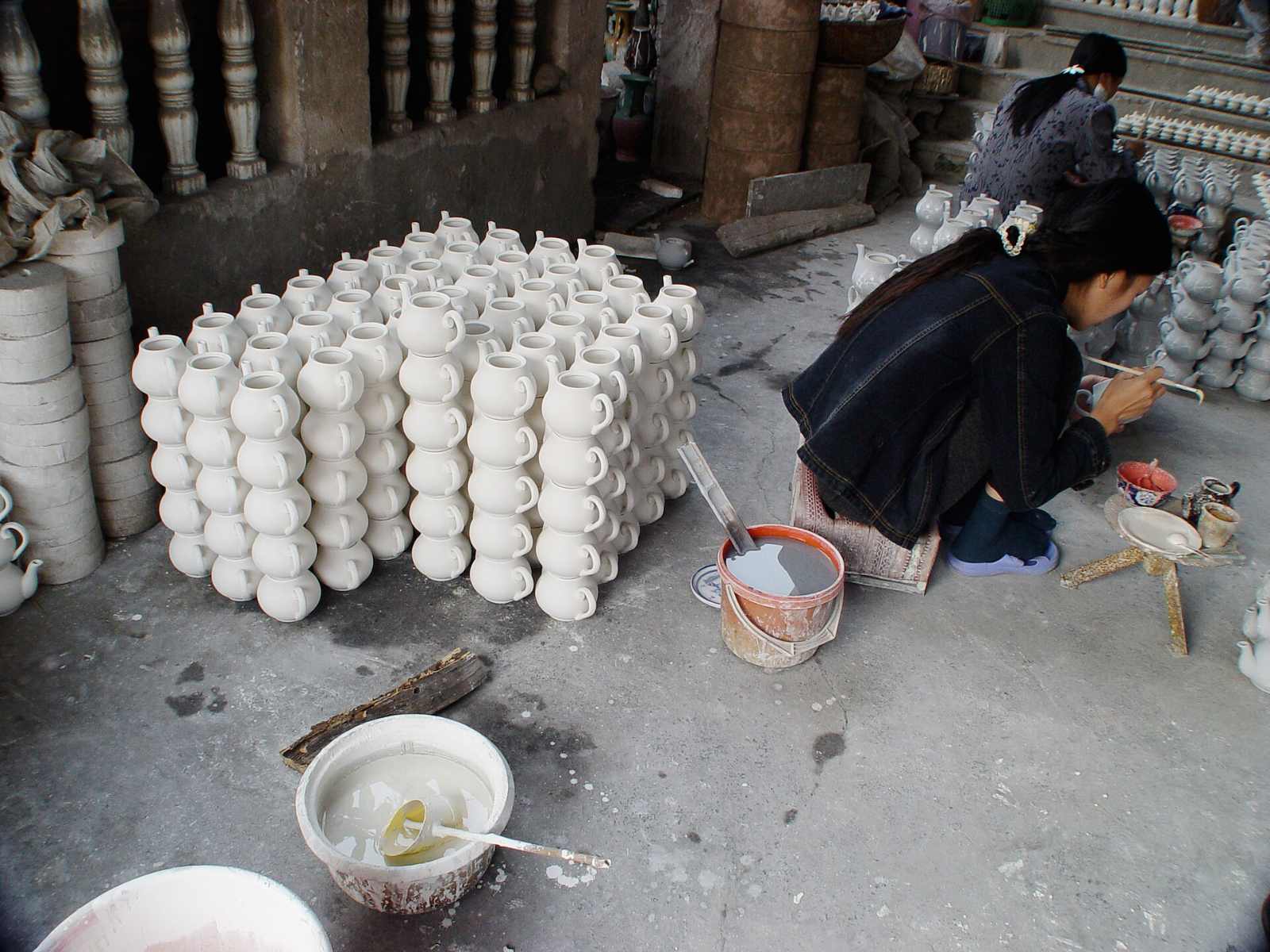
After shaping, pieces are left to firm up, then their feet and rims are trimmed. This is when painters work: brushing directly onto the clay, or carving and adding relief.
Glazing and firing
Glaze gives a piece its face. Many workshops keep their own glaze recipes, often as a family secret. Glazed pieces are stacked in the kiln and fired at high temperature for many hours.
The village once used wood-fired kilns, then coal. Today many workshops use gas kilns, which are cleaner and easier to control. That change has reduced smoke in the village, but it has also changed part of the fire-reading knowledge older potters built up.
Reading glazes like a map
To a newcomer, Bat Trang ceramics may all look alike. With practice, you start to see distinct glaze families:
- Blue and white: blue painted designs on a white body, probably the most familiar style.
- Crackle glaze: a surface of fine cracks like a spider's web.
- Brown and earth tones: close to the natural colour of fired clay, common in everyday ware.
- Modern colours: younger workshops experimenting with new palettes.
Glaze styles are not only about looks. They reflect trade history, the tastes of each period and how the village adapts to new demand. An old blue-and-white bowl and a pastel mug made last year can come from the same workshop, decades apart.
A village in change
Like many craft villages, Bat Trang faces big changes. Urbanisation has brought wide roads to its gate. Tourism brings new income but also changes the pace of life. Young people have more career choices than their parents.
Some families specialise in high-volume production to compete on price. Others return to handmade work, making less but making it well, and finding customers online. Some young people study fine arts and come back with new design ideas built on old techniques.
There is no single right path. But a question many villagers share is this: how do you keep the knowledge that lives in your hands, which cannot be printed or packaged, as life speeds up?
Visiting Bat Trang respectfully
- Go on a weekday morning. That is when workshops are really working, not performing for visitors.
- Ask before entering a workshop. Many are family homes. A greeting and a request usually meet a warm welcome.
- Ask about the process, not just the price. Potters are usually glad to talk about their craft.
- Buy from the people who make the pieces when you can. It gives their knowledge a reason to continue.
When you leave in the afternoon, as the kiln smoke thins, you might take a bowl with you. What is more worth taking is a new way of seeing a familiar object: behind every bowl are clay, fire, hands, and a whole village.
Frequently asked questions
How far is Bat Trang from central Hanoi?
About 15 km south-east, along the Red River dyke. It takes 30–45 minutes by motorbike or car depending on traffic.
Can I try making pottery in Bat Trang?
Yes. Many workshops run short wheel-throwing sessions. Ask about firing times if you want to take your piece home.
When is the best time to visit?
Weekday mornings, when workshops are busiest and visitors are fewest, are best for watching and talking with potters.

The Localis editorial team researches, writes and fact-checks stories about local culture, working with artisans, researchers and local residents.
- Master potter (sample character)
- Cộng tác viên mẫu
Read next

Hoi An lanterns and the port town's craft of light
The lanterns that light the old town every evening are handmade from bamboo and fabric. Behind them is a craft tied to Hoi An's trading history.

Cai Be floating market at dawn
On the Tien River, Cai Be's floating market was once a meeting point for boats from across the region. To understand it is to understand how Mekong communities live with the water.
Portrait of the fire keeper at a Bat Trang kiln
In every firing there is one person rarely named: the kiln keeper. They read the fire with their eyes, their nose and a lifetime of experience.